How to Read kJ on a Nutrition Label
Written by the kjtocalories.com team | Fact-checked against official food labeling standards | Last updated: July 2026
If you’ve ever flipped over a packet of food and seen a number followed by “kJ,” you’re not alone in wondering what it actually means. Kilojoules can feel a lot less intuitive than calories, especially if you grew up in a country that uses one unit but now shop somewhere that uses the other. The good news is that once you understand the basics, Read kJ on a Nutrition Label with kJ on it becomes second nature.
What Does Read kJ on a Nutrition Label Actually Mean?
kJ stands for kilojoule, which is simply a unit of energy — just like the calorie. Every time you eat something, your body converts the food into usable energy, and that energy is measured in either kilojoules or kilocalories (what most people call “calories”). The two units measure the same thing; they’re just different scales, similar to how Celsius and Fahrenheit both measure temperature.
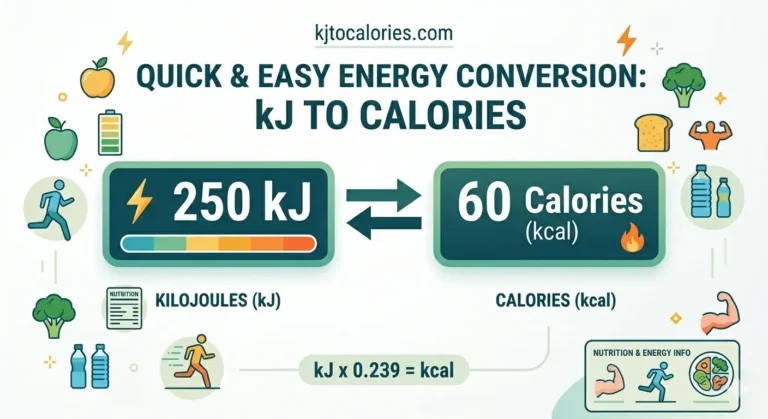
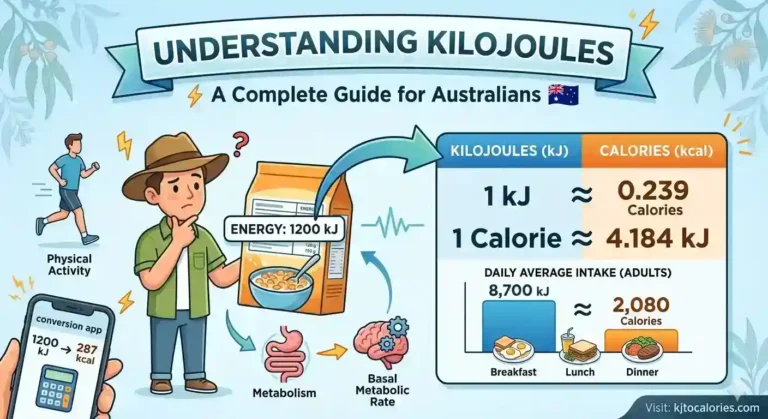
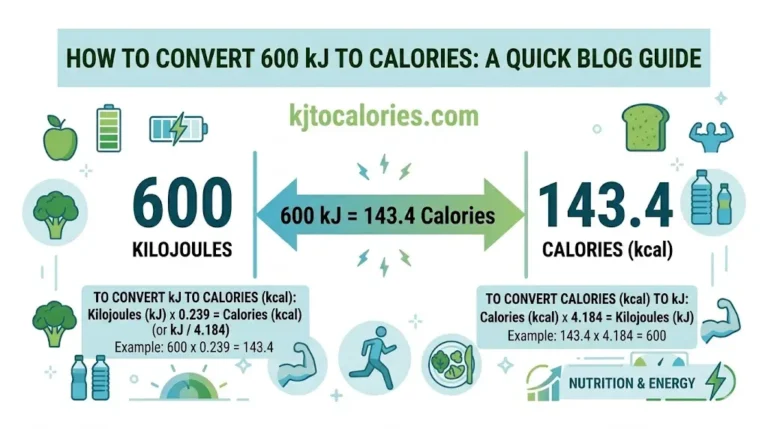
The conversion is straightforward:
1 kilocalorie (Calorie) = 4.184 kilojoules
So, if you want to convert from kJ to calories, divide by 4.184. If you want to go the other way, you multiply by 4.184.
Where to Find kJ on a Nutrition Label
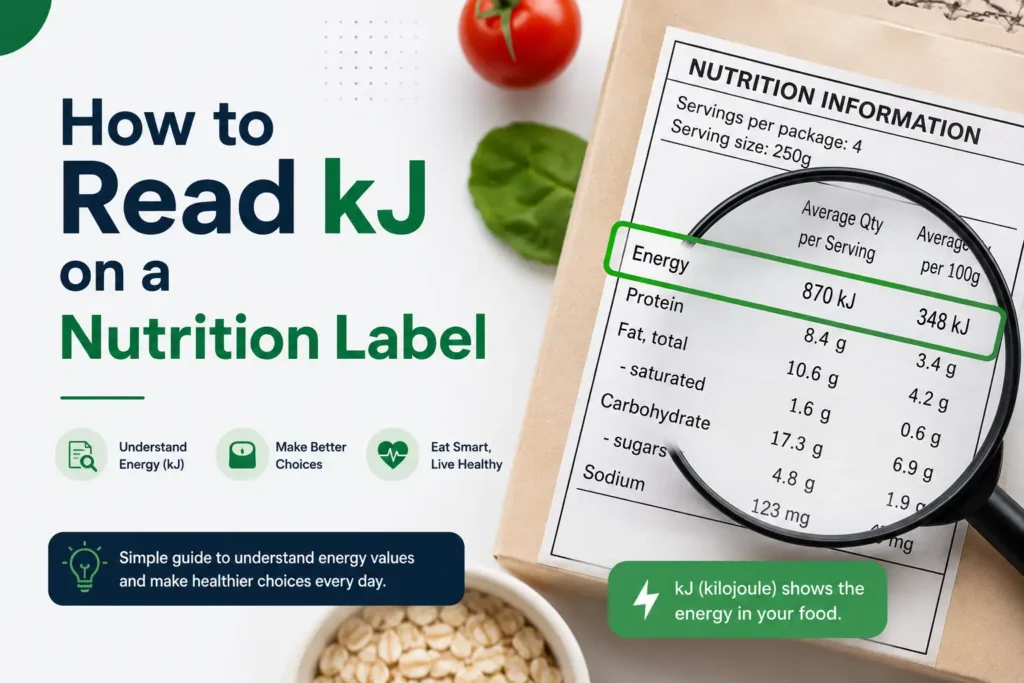
Most nutrition panels list energy near the very top, often labeled simply as “Energy.” Depending on where the product was made, you might see:
- Only kJ (common in Australia and parts of Europe)
- Both kJ and kcal side by side (common in the UK and EU)
- Only kcal (common in the US and Canada)
The label usually breaks this down two ways: energy per serving and energy per 100g. This distinction matters a lot, especially when comparing two different products with different serving sizes.
A Simple Example
Let’s say a cereal box lists:
- Per 100 g: 1,500 kJ
- Per serving (30g): 450 kJ
To understand this in calories, you’d divide each number by 4.184:
- 1,500 kJ ÷ 4.184 ≈ 358 calories per 100g
- 450 kJ ÷ 4.184 ≈ 108 calories per serving
Once you get comfortable with this math, or start using a quick converter, checking labels becomes almost automatic.
Why the Per-100g Number Matters More Than You Think
It’s tempting to just look at the “per serving” number and move on, but serving sizes aren’t standardized across brands. One company’s “serving” might be 30g, while a competitor’s version of the same product calls 45g a serving. If you’re trying to compare two similar products — say, two brands of granola — the per-100g energy value gives you a fair, apples-to-apples comparison.
A Quick Mental Shortcut
If you don’t want to do exact math every time, there’s a fast trick: divide the kJ number by 4 instead of 4.184. It won’t be perfectly precise, but it’ll get you close enough for a quick grocery store decision. For more accuracy, especially if you’re tracking intake closely for health or fitness reasons, it’s worth using an actual converter tool.
Final Thoughts
Read kJ on a Nutrition Label isn’t complicated once you know what to look for — the unit, the serving size, and the per-100g comparison. Whether you’re managing your weight, watching your energy intake for health reasons, or just curious about what you’re eating, this small bit of label literacy goes a long way toward making informed food choices.
👉 Use our free kJ to Calories Converter to check any label instantly.
Related reading:
- kJ Per 100g: What Does It Mean?
- How to Compare Food Products Using kJ Values
Sources & further reading:
Disclaimer: This article is for general informational purposes only and isn’t a substitute for personalized dietary or medical advice.