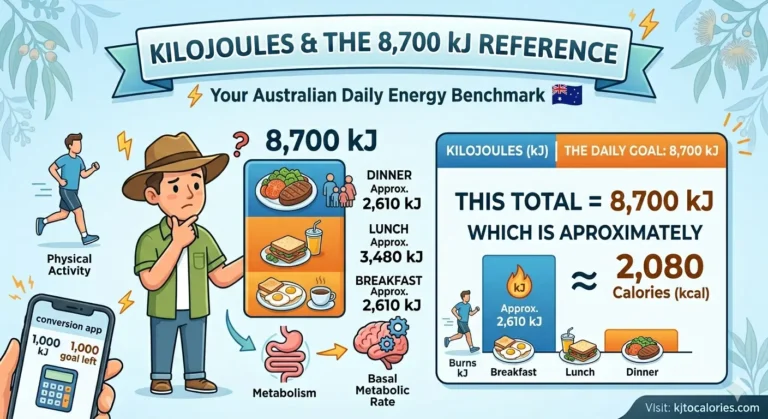
Understanding Kilojoules: A Complete Guide for Australians
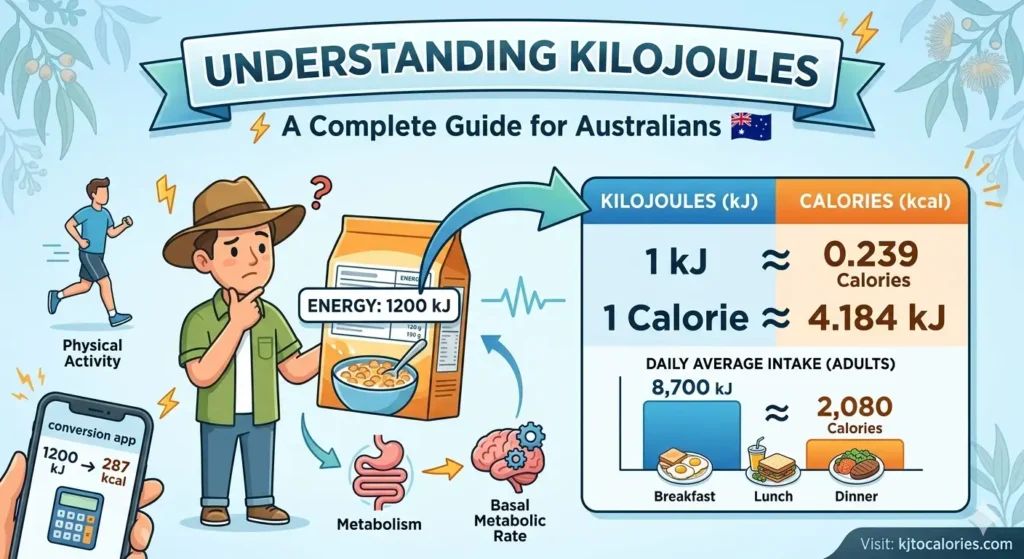
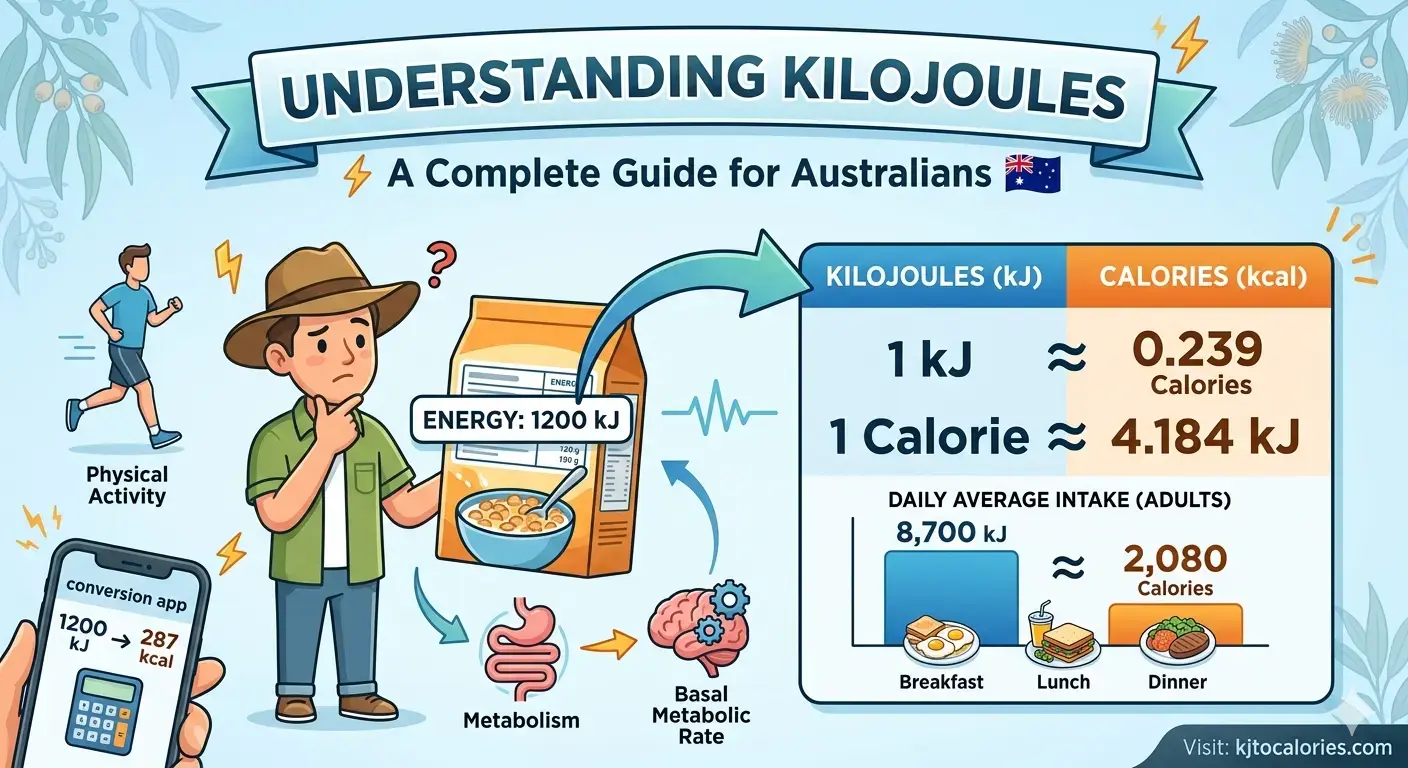
If you’ve ever looked at a nutrition label in an Australian supermarket, you’ve likely seen the term “kJ” prominently displayed. While much of the world (and most fitness apps) still uses Calories, Australia officially uses the metric measure of energy:Understanding Kilojoules is the first step toward mastering your nutrition and hitting your fitness goals.
But what exactly is a kilojoule, and how does it relate to the calories we hear about so often? Let’s break it down.
What is a Kilojoule (kJ)?
Just like kilometers measure distance and kilograms measure weight, kilojoules measure energy. Specifically, it measures the amount of energy you get from food and the energy your body burns through activity.
The Magic Number: 4.184
The most important thing to remember is the conversion factor.
1 Calorie (kcal) = 4.184 Kilojoules (kJ)
To quickly estimate your intake while shopping, many Australians use the “Rule of 4″—simply divide the kJ number by 4 to get the approximate calorie count.
Why does Australia use kJ?
Australia adopted the metric system in the 1970s. Since the Joule is the International System of Units (SI) unit for energy, it became the standard for food labeling under the Food Standards Code.
Whether you are buying a meat pie or a protein shake, the energy content must be listed in kJ by law.
The “8,700 kJ” Reference
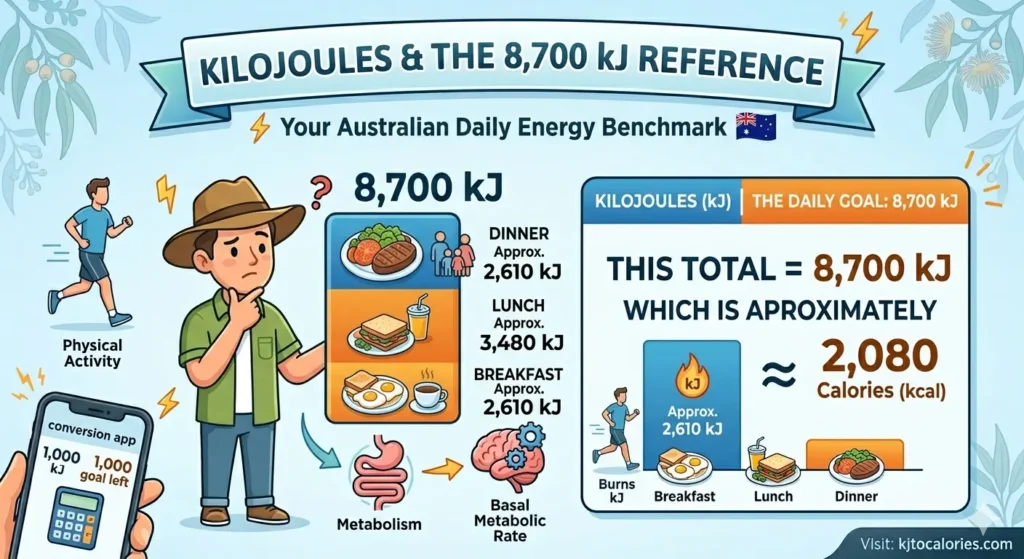
You may have noticed the fine print on menus: “The average adult daily energy intake is 8,700 kJ.” In calorie terms, 8,700 kJ is approximately 2,080 calories. This is the benchmark used by health authorities to help people understand how much energy they need, though your personal needs may differ based on your age, weight, and activity level.
Quick Conversion Reference Table
If you are standing in the aisle at Coles or Woolworths, use this quick guide:
| If you see (kJ) | It means (Calories) |
| 400 kJ | ~95 kcal (A small snack) |
| 1,000 kJ | ~239 kcal (A light meal) |
| 2,000 kJ | ~478 kcal (A standard lunch) |
| 8,700 kJ | ~2,080 kcal (Total daily average) |
How to Track Your Energy Accurately
Most global fitness apps like MyFitnessPal or Strava default to Calories. If you are living in Australia, this constant manual calculation can be exhausting.
To save time and ensure your nutrition is on point, visit kjtocalories.com. Our instant converter handles the math for you so you can focus on your health goals, not the calculator.